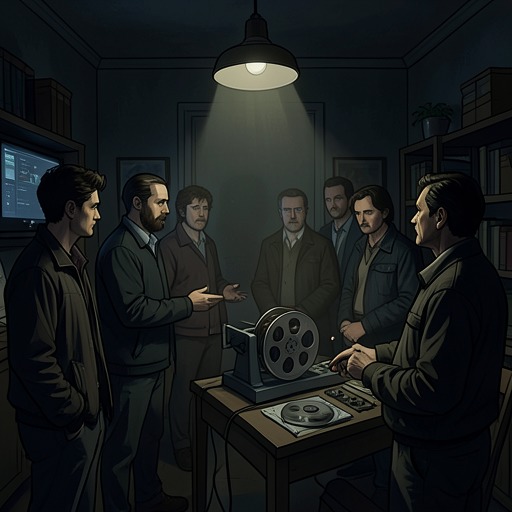
Pete Attucks
The SympathizerPete Attucks is the A-Team’s only Black soldier in the war film being made within the novel. His scripted fate links a story of Black sacrifice in American history to the film’s staged violence against Vietnamese characters, making him central to the production’s uneasy traffic between historical memory and wartime spectacle.
Identity and Role in the Film
The film establishes Attucks through a genealogical anecdote: he traces his ancestry back two centuries to Crispus Attucks, described as the first famous Black man to sacrifice his life for the cause of white people. Once the crew explains this lineage, the narrator says, Attucks’s fate is sealed. The detail makes his identity part of the film’s machinery of foreshadowing: his ancestry is introduced not simply as background, but as a signal that his character is being prepared for a violent end.
Attucks serves in a Popular Forces squad led on a probe by Sergeant Pete Attucks himself—identified in the film’s account as the A-Team’s only Black soldier. During the operation, he steps into a bamboo-spike bear trap that clamps onto his left foot. As the rest of the squad is exterminated, Attucks and Binh continue firing back; Attucks eventually loses consciousness, while Binh runs out of ammunition.
Capture and the Film’s Violence
Once Attucks and Binh are captured, the film assigns Attucks a deliberately degrading death: the Viet Cong castrate him and stuff his genitals into his mouth. The scripted atrocity turns his earlier foreshadowed fate into a spectacle of bodily violation, while the novel makes clear that the violence belongs to the war film’s representation of Vietnamese fighters as perpetrators.
The scene also echoes the lessons Claude gives in his interrogation course. He presents an illustration of an Indigenous massacre and a photograph of a similarly mutilated American soldier captured by the Viet Cong, then follows them with an image of an American GI urinating on a Viet Cong corpse. By placing Attucks’s fictional fate alongside these images, the narrative exposes how the film and its military training material arrange violence into competing examples—while Claude’s insistence on a shared humanity sits uneasily beside the images of desecration.
Performance and the Film’s Construction
Attucks’s role belongs to a deliberately staged sequence in which four resentful refugees and former freedom fighters perform the enemy they are meant to portray. Once the camera rolls, they turn the scene into a display of hostility, while the script positions Attucks and Binh as captives whose suffering will serve the war film’s account of its adversaries. Attucks is therefore presented less through personal history or interior life than through a designed contrast: his ancestry invokes Black sacrifice in American history, and his scripted capture converts that inheritance into another image of wartime violence. The novel’s attention to the performers’ labor makes the scene’s artifice visible without softening its brutality: Attucks’s fate is both a character’s fictional destruction and a product of choices about how the film represents the war.
Narrative Significance
Attucks reaches the reader through layers of mediation: the film’s account of his ancestry and battlefield fate, the narrator’s description of its production, and Claude’s instructional images. Even the historical reference that gives him a lineage is used to forecast what the script will do to him, rather than to open a fuller view of his life. That structure makes his role an example of how the film converts identity into a cue for spectacle: a Black soldier’s inherited association with sacrifice becomes the prelude to a scripted image of capture and desecration.